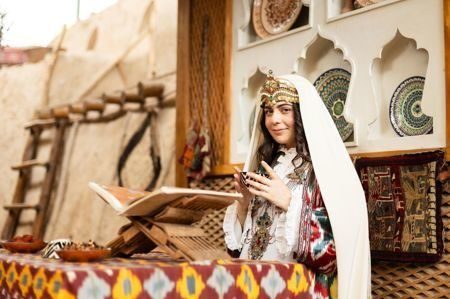


Khiva is a city where time seems to have stopped. Everything here looks just as it did centuries ago: clay walls, narrow alleys, towering minarets, and carved wooden doors behind which once lived merchants, craftsmen, and rulers. This city doesn't need to be described — it needs to be felt. Khiva is a living oriental fairy tale under the open sky.
The history of Khiva goes deep into the past. The first settlements on its site appeared as early as the 5th century BCE. According to legend, the city was founded where the prophet Noah stopped after the flood and dug a well with crystal-clear water. That well — Kheyvak — gave the city its name. While that’s a beautiful story, one thing is certain: Khiva is one of the oldest cities in Central Asia.

In the Middle Ages, Khiva became an important stop on the southern route of the Great Silk Road. Caravans came here from Persia, India, the Caucasus, and China. The city thrived on trade — especially in slaves, carpets, silk, and spices. In the 17th century, Khiva became the capital of the Khorezm Khanate and developed into a political and cultural hub of the region.
At the heart of the city lies Ichan-Kala, the inner fortress, surrounded by massive adobe walls. Today, this architectural ensemble is a UNESCO World Heritage Site. Within its walls are more than 50 historical monuments and around 250 old houses. Among them are the Islam Khodja Minaret, the Muhammad Amin Khan Madrasah, the Tash-Hauli Palace, the Juma Mosque, caravanserais, and traditional bathhouses.
The atmosphere of Khiva is shaped by its brick-paved lanes, green courtyards, and artisan workshops where ceramics, carpets, knives, and jewelry are still made by hand. The city breathes history — yet it remains alive. Festivals are held here, music drifts through the air, and the scent of tandir bread and herbal tea fills the streets.
In the 19th century, Khiva remained an independent khanate until it was annexed by the Russian Empire. After the revolution, it became part of the Soviet Union. Unlike many other cities, Khiva’s historical appearance was largely preserved. Thanks to its dry climate and careful preservation, it remains remarkably intact today.
Khiva is not just a place to see — it’s a place to feel. Here, time fades. You can watch the sunset from the rooftop of an old madrasah, wander the evening streets lit by lanterns reflected on clay walls, and hear the wind carry echoes of footsteps down narrow passages unchanged for centuries.
Khiva is not a museum. It is a living city, where the past breathes beside you.