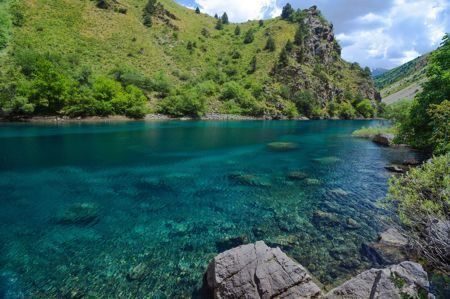


The flora of Uzbekistan has more than 3700 species of plants. 20% of the species are endemic (more no where to meet); a large part of their grows in the mountains. Flora of steppes and deserts consists of unique bushes. On the low plains developed tree, shrub, and herbaceous vegetation. Tugai forests are characterized by thickets of cane and Candiria.
In the landscape of the upland plains-grass, trees, shrubs are found on water streams. Here grow different types of onions, Tulips, rhubarb, irises. The high foothills are dry motley grass steppe on dark serozems. On rocky areas grow shrubs-almonds, curchava, cherry.
In the low mountains — mostly growing valuable wood species — Zaravshan juniper. Also common hardwood - maple, hawthorn, different forms of wild Apple, pistachio, walnut, birch, willow, poplar, cherry magalebka. The low is very rich in shrubs: honeysuckle, barberry, rose hips, tavolga, thickets of wild vineyard. Very diverse set of herbs: Clary sage, zizifora, rhubarb, sorrel, Tulip, Pskov onion (valuable medicinal plant). In the middle mountains grows wild rose and other shrubs. In the highlands only 30% of the soil is covered with vegetation. Here grows mainly tipchak.
Wildlife
As well as plant and animal life of Uzbekistan is diverse. Here you can meet many representatives of Asian fauna. Among them are: mammals (wolf, big-eared hedgehog, a Fox, a corsac, a hare-tolai, turtle, Gazelle, antelope, wild boar, markhor, mountain sheep, badger, stone marten, bear, snow leopard, ermine, Siberian mountain goat, prestigiosa rat, Jackal and Bukhara deer, Bokhara horseshoe bat, eared bat gopher, jerboa), reptiles (geckos, Agama, sand boa, arrow-snake, Central Asian Cobra, Copperhead snake, get snake, Alay), birds (Houbara bustard, avdotka, Sandgrouse, saja, Dun Nightjar steppe Buzzard, Jay, sorokoput, Warbler, Finch, oatmeal, lentils, big turtle, black vulture, Griffon vulture, vulture, Himalayan snowcock, lammergeier, lesser, jackdaw, pheasant, cuckoo, yellow Wagtail, magpie, black crow, southern Nightingale, bearded tit, reed Bunting, great reed Warbler), insects and etc.
In the waters there are about 70 species of fish: Aral salmon, Amu Darya trout, pike, Aral roach, Aral barbel, carp, silver carp, catfish, pike, perch,snakehead, common carp, white Amur.