

The monetary unit of the Republic of Uzbekistan is Uzbek sum (UZS, code 860). The name of the national currency comes from the name of the coin of some Turkic peoples and The Golden Horde.
During the existence of the Soviet Union, when Uzbekistan was a Federal Republic, the Soviet ruble was in circulation on its territory. Since November 15, 1993, the country has issued the sum coupons to protect the domestic market from the inflationary processes of the Soviet ruble. From 1 July 1994 in the country by the Central Bank of Uzbekistan were introduced, the current monetary unit, staying in the back.
At the moment, the rate of Uzbek soums against other currencies is such that when you exchange for 1 us dollar, you can get a little less than eight thousand soums, for one Russian ruble will give about 125 soums.
1 Uzbek sum consists of 100 tiyins. The name of the fractional part of the Uzbek sum-tiyin comes from the ancient Turkic word "protein".
The national Bank of Uzbekistan, which carries out emission and financial policy in the country, has issued banknotes in denominations of 1 (one), 3 (three), 5 (five), 10 (ten), 25 (twenty-five), 50 (fifty), 100 (one hundred), 200 (two hundred), 500 (five hundred) and 1000 (one thousand) Uzbek sums. In addition, minted and are in circulation coins in denominations of 1 (one), 3 (three), 5 (five), 10 (ten), 20 (twenty), 50 (fifty) tiyins, as well as 1 (one), 5 (five) and 10 (ten) soums. It is worth noting that in parallel circulation are two series of coins (1994 — 2000 and 2000 — 2001) in denominations of 1 (one), 5 (five) and 10 (ten) soums, equivalent to the reception as a means of payment.
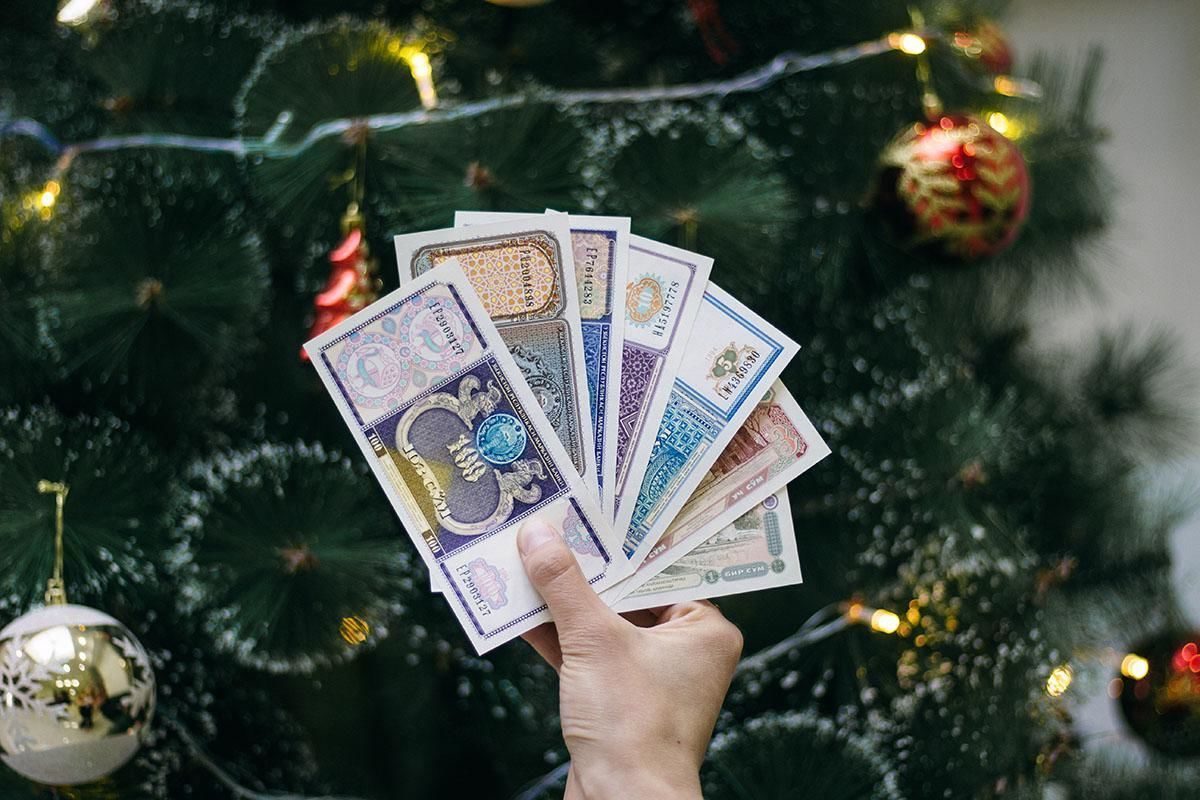
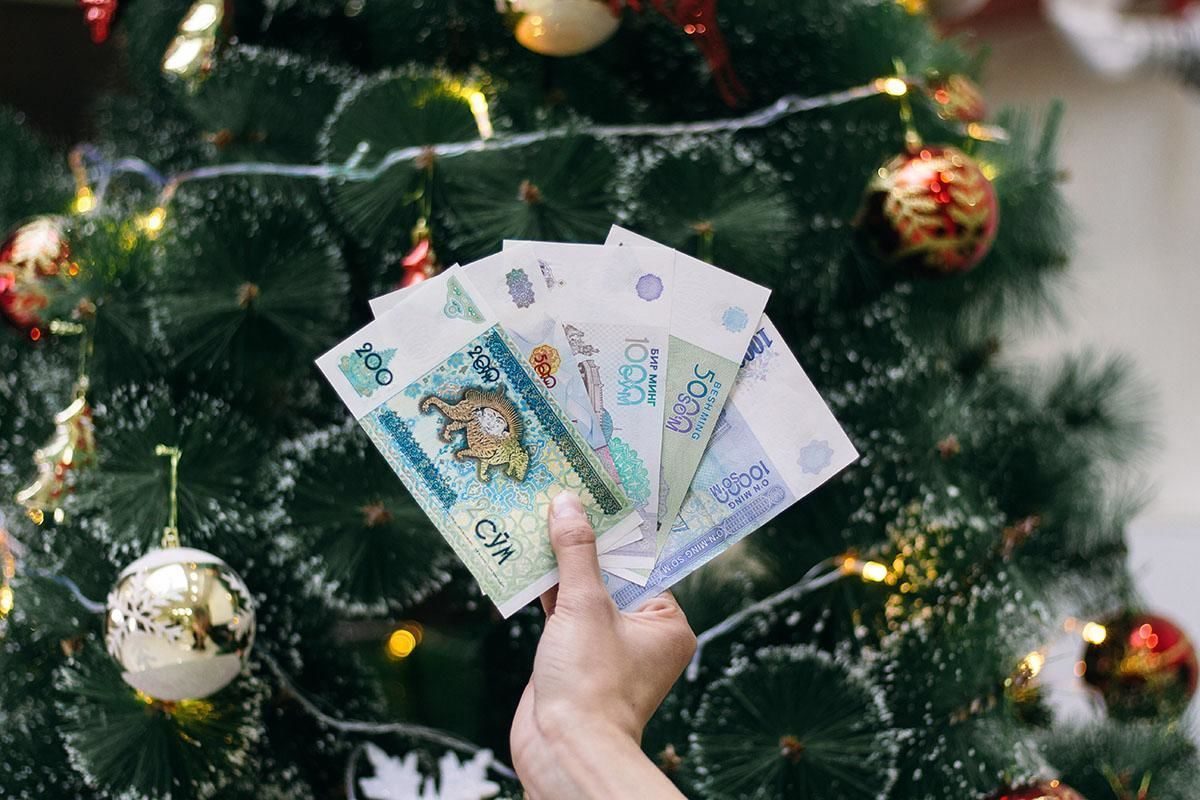
Design and design of Uzbek soums banknotes is quite original, especially their reverse. On the obverse, the coat of arms of the country is invariably depicted in the national ornamental frame in different variants, characteristic for each next denomination of the banknote. On the obverse is depicted the same way in several places, the denomination of the bill both in digital and in letter format. On the reverse of the banknote depicts the architectural monuments and memorable places of Uzbekistan. So on the banknote denomination of 1 sum shows a theatre named after Alisher Navoi in Tashkent, 3, architectural ensemble, which is a national cultural monument in the city of Bukhara, a 5 sum – a monument to Alisher Navaiy the architectural setting, 10 sum – the mausoleum of the Timurid dynasty, is a national and cultural monument, 25 sum – the architectural ensemble of the ancient "Shahi Zinda", which is a national treasure, 50 sum – the architectural ensemble and the historic cultural monument in Registan square, 100 sum – the building of the peoples 'Friendship Palace in Tashkent, built after the earthquake in 1972, 200 sum-fresco fragment depicted on the facade of the madrasah "Sherdor", 500 sum – Tashkent monument to Amir Temur, 1000 sum – national state Museum of the Timurid dynasty in the capital.
Banknotes of coupons of the Republic of Uzbekistan were printed at securities factories in Germany by order of the government and the National Bank of Uzbekistan, banknotes of Uzbek sums – at the national Mint of Uzbekistan in Tashkent.
The coins of Uzbekistan in their design are very much like the old Soviet coins, only the coins of the series 2000-2001 are slightly different from them. On the obverse of the coins minted coin denomination in digital display, framed by cotton inflorescence, at the bottom of the specified year series of coins. The reverse features the national emblem of the country with the name of the country in the circle of the coin at the bottom. Coins with denominations of 1, 3 and 5 tiyins are made of steel covered with bronze, and coins of large denominations – of steel covered with Nickel. The coins of the series 2000-2001 in denominations of 1, 5 and 10 sum on the obverse have a minted coin denomination in digital display, shifted from the center to the left upper part and the profile of the territory of the country, which in turn is shifted to the right lower part. Coins in denominations of 1 and 10 sum of this series are made of steel, Nickel – plated, and 5 sum-steel, brass-plated. The reverse of the coin depicts the state emblem of the country and the inscription in Uzbek language, denoting its name.