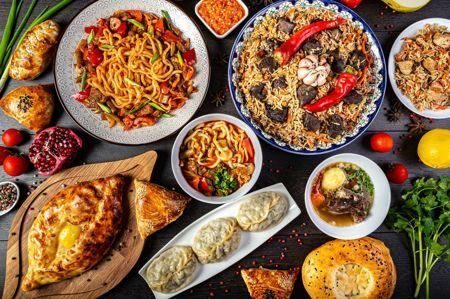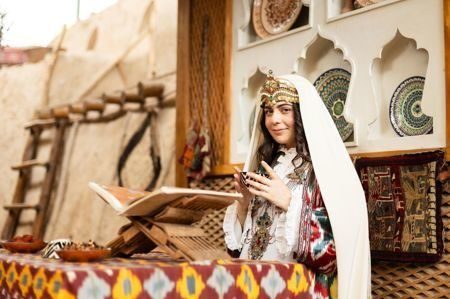


Uzbek national cuisine has a long history and is closely connected with Uzbek culture, language, traditions, as well as the country’s geographical and climatic conditions. The diversity and distinctive character of Uzbek cuisine have been significantly influenced by the fact that, unlike the nomadic peoples of neighboring regions—Kazakhs, Karakalpaks, Kyrgyz, and Turkmens—Uzbeks have historically led a predominantly settled lifestyle rather than a nomadic one. At the same time, the adoption of culinary traditions and cultural assimilation, particularly Persian-Tajik influences, have played an important role in shaping the diversity and richness of Uzbek cuisine.
Uzbek
National
Cuisine
is characterized by hearty and aromatic meat dishes, rich soups made with plenty of fresh vegetables and herbs, exotic sweets, and unique pastries. The distinctive features of Uzbek cuisine, like those of many other national cuisines, are shaped by the specifics of local agriculture. Grain farming is highly developed in Uzbekistan, so noodles and bread hold an important place in the local cuisine. Sheep farming is also widespread, making lamb the most popular type of meat and a key ingredient in many traditional Uzbek dishes. Horse meat and camel meat are used less frequently.
Uzbek cuisine has an extensive variety of recipes. There are more than 100 types of plov, 60 types of soups, and 30 varieties of kebab.
Plov is the most popular dish in Uzbekistan. It is prepared every day as well as for special occasions, both secular and religious. Each region of Uzbekistan has its own version of plov — Bukhara, Khorezm, Fergana, Samarkand, and Tashkent plov. They differ in their cooking methods and the ingredients added to the basic recipe.
Among the soups, lagman and shurpa are particularly delicious and aromatic. Lagman is a noodle dish, while shurpa is a rich soup made with lamb, potatoes, fresh herbs, and vegetables. Manti, steamed dumplings filled with meat, pumpkin, and seasonal spring herbs, are another popular traditional dish.
Flatbreads come in a wide variety of shapes and flavors. Uzbek flatbreads (non) are traditionally baked in a tandoor, a special clay oven. The tandoor is also used to prepare samsa, traditional pastries filled with meat, onions, and lamb fat.
No meal is complete without sweets. They are served before the main course, usually with green tea, the most popular beverage in Uzbekistan. Traditional sweets and treats include dried apricots, raisins, nuts, halva, parvarda, baklava, and honey. In spring, sumalak is an essential part of the table — a delicious and nutritious dish made from sprouted wheat.
Traditional meat dishes are generally rich and hearty, with extensive use of cottonseed oil, lamb fat, vegetable oil, spices, and fresh herbs. Meat dishes are almost always prepared with onions, and the proportion of onions used is considerably higher than in European cuisine.
Many Uzbek dishes have complex recipes and are prepared by hand, requiring years of experience and culinary skill. Preparing large quantities of plov using dozens or even hundreds of kilograms of rice requires particular expertise. Manti and dumplings (chuchvara) are traditionally shaped by hand, while the popular spring dish sumalak is cooked over low heat for more than 10 hours. The preparation of the wheat for sprouting can take several days.
Today, modern gas and electric stoves, kitchen utensils, and household appliances are widely used in Uzbek cuisine. However, traditional cooking methods remain very popular. An essential piece of traditional cookware is the kazan, a large, round-shaped cast-iron cooking pot. The tandoor, a traditional clay oven, can be found throughout Uzbekistan and remains an almost indispensable part of traditional cooking, especially in rural areas.

A traditional type of tableware used to serve plov and many other dishes is the lyagan, a large flat plate or serving dish. In modern Uzbek cuisine, forks are rarely used. If plov is not eaten by hand, it is traditionally eaten with a spoon. Other types of tableware commonly used in Uzbek cuisine include the v-shaped deep bowl and the piala, a small bowl traditionally used for tea.
There are noticeable regional differences in Uzbek national cuisine. In the north, the main dishes include plov and various dough-based dishes. In the south of the country, people tend to prefer dishes made with a combination of vegetables and rice. In the Fergana Valley, rice is usually darker and more fried, while in Tashkent it tends to be lighter.
In Uzbek families, cooking at home is traditionally considered a man's responsibility, and men often take on cooking duties. Preparing a large quantity of plov in a kazan using 100 kilograms or more of rice is traditionally regarded as a task for men. For a European visitor, fully experiencing an Uzbek feast can be quite a challenge, as Uzbek cuisine is known for being rich and filling.