

Karakalpakstan, officially known as the Republic of Karakalpakstan, is an autonomous republic in northwestern Uzbekistan with a unique history, culture, and landscape. It occupies nearly one-third of Uzbekistan’s territory and is bordered by Kazakhstan to the north and Turkmenistan to the south. Despite its vast size, Karakalpakstan is sparsely populated and characterized by wide deserts, steppes, and the remnants of the Aral Sea.
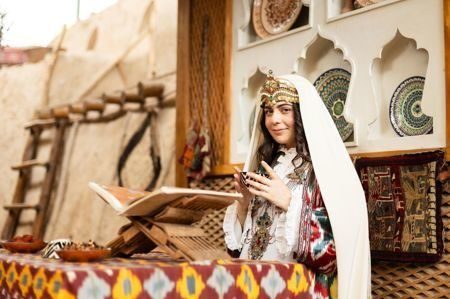
The Karakalpak people are a Turkic ethnic group with a distinct language closely related to Kazakh and Uzbek. Their traditional culture reflects a nomadic heritage, visible in folk music, epic poetry, craftsmanship, and customs. Hospitality and respect for elders are deeply rooted values in Karakalpak society.
Historically, Karakalpakstan has been home to ancient civilizations. The region contains numerous archaeological sites, including Toprak-Kala, Ayaz-Kala, and Kyzyl-Kala, which were once powerful fortresses of ancient Khorezm dating back over two thousand years. These ruins stand as silent witnesses to a rich and complex past shaped by trade, warfare, and cultural exchange.
One of the most significant modern challenges facing Karakalpakstan is the Aral Sea ecological disaster. Once one of the world’s largest lakes, the Aral Sea has largely dried up due to extensive irrigation projects during the Soviet era. This environmental catastrophe has led to climate change, health issues, and economic difficulties for local communities. At the same time, international and regional efforts are underway to mitigate its effects and promote sustainable development.

The capital city, Nukus, is the political and cultural center of Karakalpakstan. It is home to the famous Savitsky Museum, often called the “Louvre of the Steppe,” which houses one of the world’s most important collections of Russian avant-garde art, as well as Karakalpak folk art and archaeological artifacts.
Today, Karakalpakstan is a region of resilience and cultural pride. While facing environmental and economic challenges, it continues to preserve its identity, traditions, and historical heritage, making it an important and distinctive part of Uzbekistan and Central Asia as a whole.
Location: Aral sea